Eight fashion processes, preconfigured.
Each process defines its trigger, queried data, Digital Workers, rules, human control and requested action.
Processes
Every one opens a real operational flow.
These are not brochure items: every link opens the screen that runs the process in the demo.
Demand planning
Demand planning
Forecast deviation by market and channel, with the signals behind it.
Buying
Buying
Open-to-buy pressure and FW26 overstock risk, ranked by recoverable value.
Allocation
Allocation
Where units should sit against coverage targets and what a transfer would change.
Replenishment
Replenishment
Store-level gaps turned into governed requests without spreadsheet rounds.
Merchandising
Merchandising
Full-price sell-through by brand and category, with decisions waiting.
Retail performance
Retail performance
Store and market performance read through the same fashion model as planning.
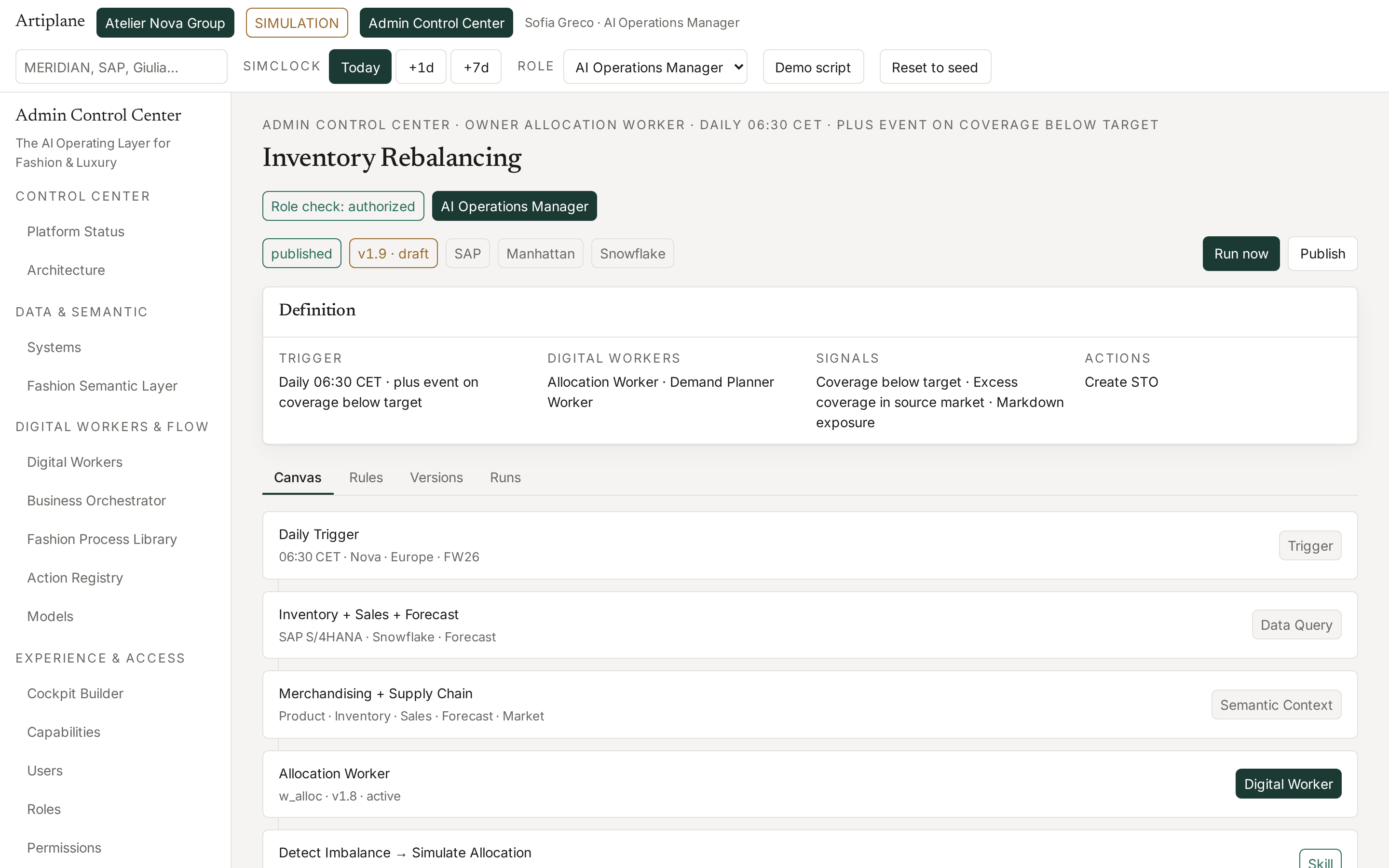
Inventory balancing
Inventory balancing
Imbalance detected, transfer simulated, approved, executed and measured after seven days.
Supplier risk
Supplier risk
Late inbound, capacity and colorway risk brought together before the buy is committed.
The flagship process
Inventory balancing, from signal to measured result.
Italy at 8.0 days, Germany at 31, 500 units moved, €445,000 of exposure approved and €84,000 of markdown avoided.
Pick a process and run it.
Enter as the role that owns it and follow the flow to the result.